Building Strong Foundations: Strength Training for Young Athletes
Strength is not just about lifting more weight. For young athletes, it is about learning to move well, building confidence, developing discipline, and preparing the body for the demands of sport and everyday life.
As middle-school athletes begin to take sports more seriously, strength training can become an important part of their development. When it is age-appropriate, carefully supervised, and centered on proper technique, resistance training can help young people establish a strong athletic foundation while learning lessons that extend far beyond the gym.
A foundation for better movement
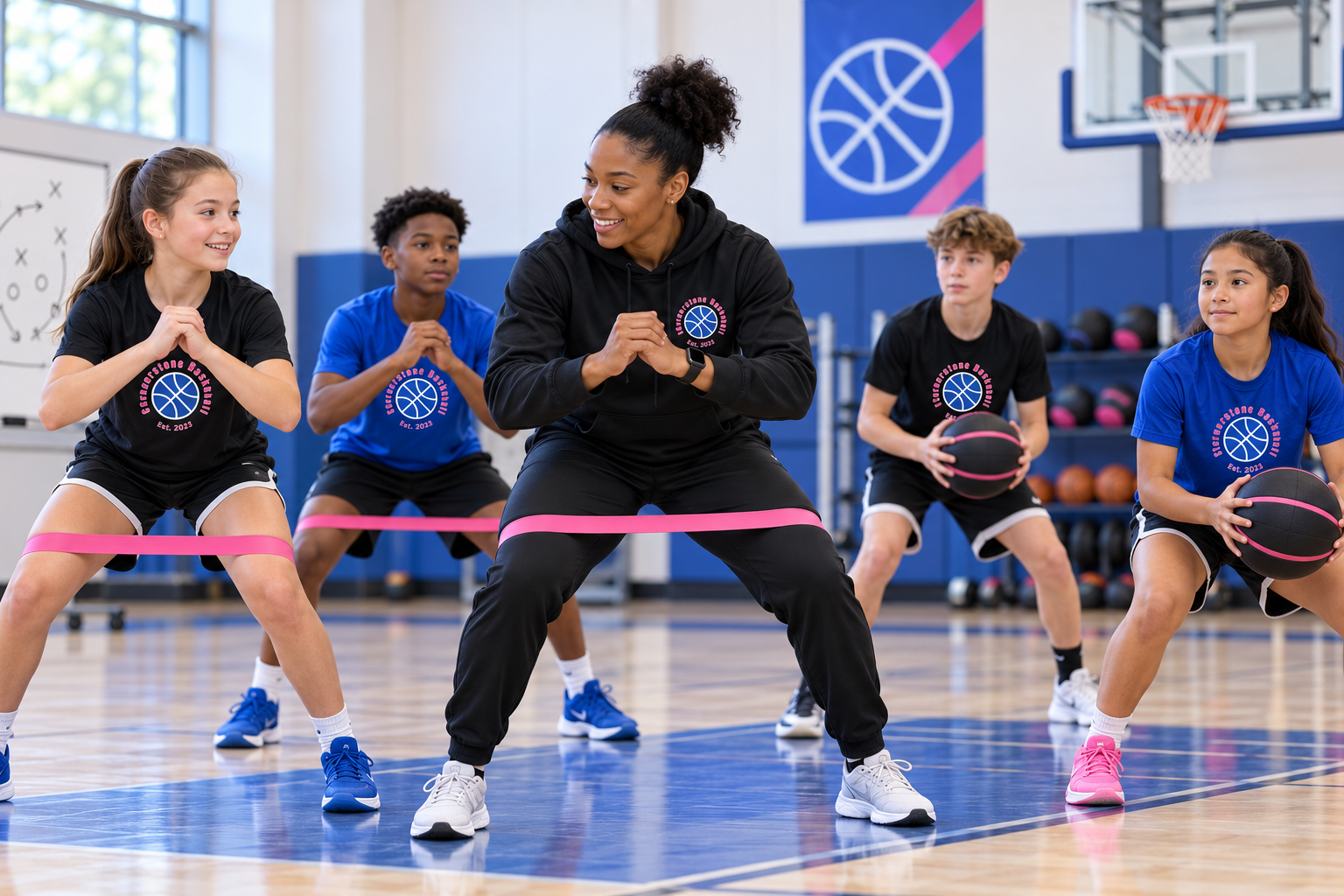
Youth strength training should not look like an adult bodybuilding program. It can include bodyweight movements, resistance bands, light medicine balls, appropriate free weights, and other controlled exercises. The goal is to teach athletes how to squat, hinge, push, pull, brace, land, and change direction with good form.
These movement skills can support strength, endurance, balance, coordination, and postural control. For basketball players, that foundation matters when sprinting, stopping, jumping, rebounding, defending, and absorbing contact.
Discipline that carries beyond sports
A good training program teaches patience. Young athletes learn to listen to coaching, practice technique, set realistic goals, and make progress one step at a time. They also learn that improvement comes from consistency—not shortcuts.
That discipline can carry into school, relationships, and other responsibilities. Showing up prepared, accepting correction, and staying committed when progress feels slow are leadership habits as much as athletic habits.
“The goal is not to create the strongest child in the room. The goal is to help each athlete become stronger, safer, more confident, and more capable than they were yesterday.”
Confidence earned through progress
Young athletes often gain confidence when they see what their bodies can learn to do. Completing a controlled set of push-ups, holding a stable plank, improving a squat pattern, or moving through a circuit with better technique provides clear evidence of growth.
Those small accomplishments build belief. Athletes begin to understand that ability is not fixed—it can improve through coaching, effort, and repetition. That mindset can help them respond more positively to mistakes and challenges on the court.
Healthy habits for the long term
Strength training can contribute to a well-rounded approach to health and fitness. Developing strong muscles and sound movement patterns during adolescence can support an active lifestyle. It should work alongside basketball practice, aerobic activity, mobility, proper nutrition, hydration, sleep, and recovery—not replace them.
Teamwork in the training room
Strength work also creates opportunities for athletes to encourage one another. Partners can count repetitions, help each other remember technique cues, celebrate improvement, and work through challenging circuits together. These moments reinforce the same communication, accountability, and unity that teams need during games.
What safe youth strength training looks like
Safety must always come first. Programs for young athletes should be led by a qualified adult who understands youth development and can teach each movement clearly. Athletes should master technique with little or no resistance before adding load.
Begin with a proper warm-up and finish with a cool-down.
Use bodyweight exercises, bands, medicine balls, and manageable resistance.
Prioritize controlled movement and full range of motion over heavy weight.
Increase resistance gradually only after the athlete demonstrates consistent form.
Train the whole body, including the core, rather than focusing on one “show” muscle.
Avoid powerlifting, bodybuilding, explosive maximal lifting, and one-repetition maximum testing for skeletally immature athletes.
Stop when pain, dizziness, illness, or injury occurs and seek appropriate medical guidance.
FOR PARENTS AND CAREGIVERS
Before a young athlete begins a formal strength program, discuss any medical conditions, previous injuries, recurring pain, or other concerns with the child’s pediatrician or qualified healthcare professional.
Strong in every sense of the word
The greatest value of youth strength training is not measured by the number on a weight. It is seen in better movement, growing confidence, patient effort, responsible choices, and teammates who learn to support one another.
By emphasizing safety, sound coaching, and steady progress, parents and coaches can help young athletes build a foundation for success on the court—and for a healthy, resilient life beyond it.

