
Respect Starts With Listening
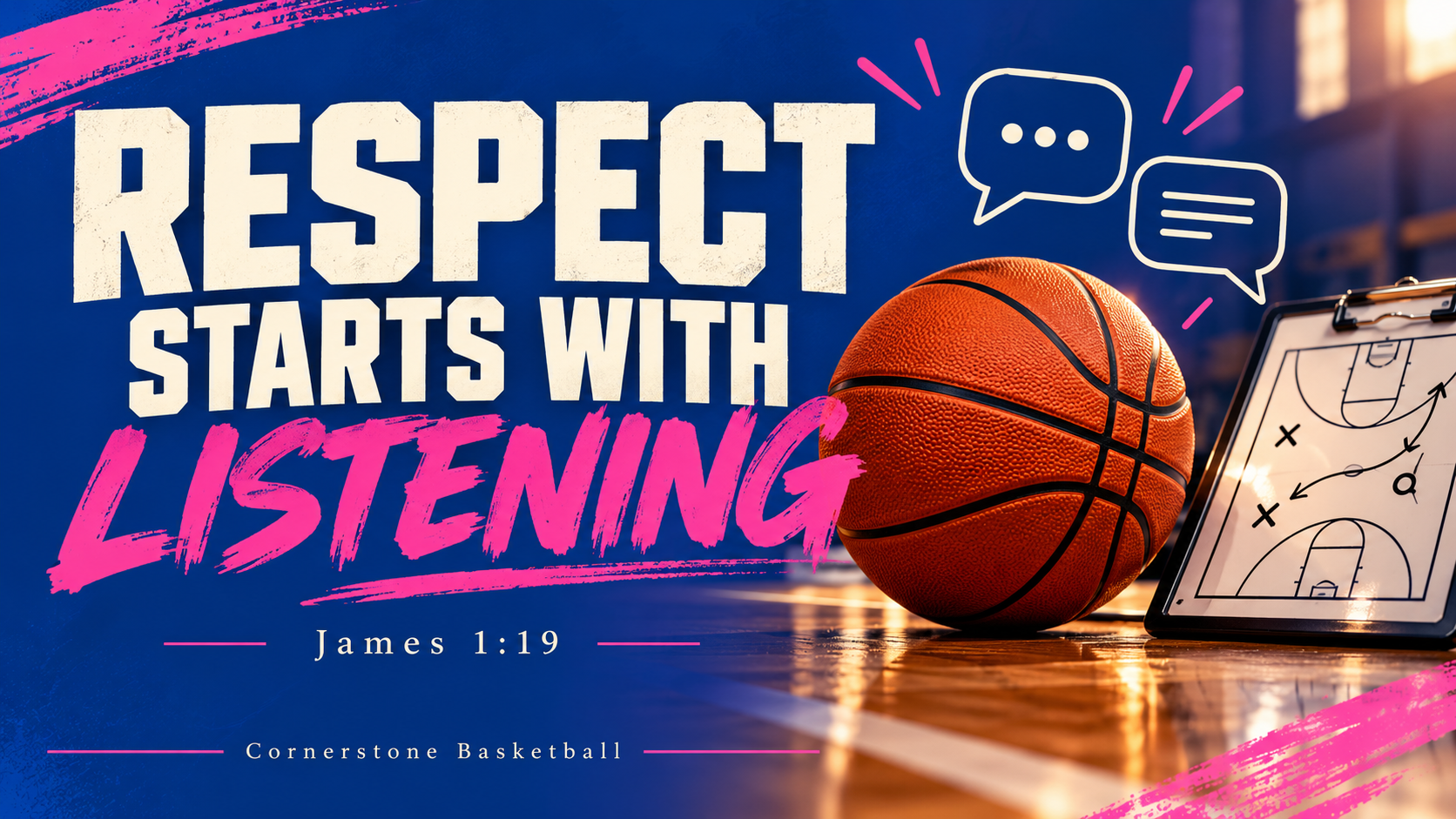
Basketball gives us plenty of chances to practice respect. We can show it when a coach explains a drill, when a teammate asks for help, or when a call does not go our way. One of the clearest ways to show respect is also one of the simplest: listen.
At Cornerstone Basketball, we want students to grow as athletes and leaders through basketball, faith, accountability, and character. Listening helps us put each of those values into action.
A Bible verse to guide our response
“Everyone should be quick to listen, slow to speak and slow to become angry.” — James 1:19, NIV
This verse gives us a practical pattern: listen first, choose our words carefully, and take time to calm down before responding. We can practice that pattern in the gym, at home, and at school.
Listening shows that people matter
When someone is speaking, our attention communicates, “What you have to say matters.” At practice, that means stopping the dribble when the coach calls the group together, setting aside side conversations, and focusing on the instructions.
Listening also means trying to understand. If you missed a direction, ask a question. “Coach, can you explain where I should move after the pass?” shows that you want to learn and help your team.
Receive coaching with humility
Getting corrected can feel uncomfortable, especially in front of teammates. You might want to explain yourself immediately or say, “I know.” But a correction can help you see something you missed.
Imagine your coach asks you to stay in a defensive stance. Instead of rolling your eyes, listen, acknowledge the instruction, and apply it on the next possession. Being coachable means staying willing to learn, even when the lesson is difficult.
Respect works both ways. Coaches should give clear instruction with patience and dignity. Players should feel comfortable asking questions and telling a trusted adult when something feels unsafe or hurtful.
Respect your teammates and opponents
Listening is a team skill. Hear a teammate out before blaming them for a missed assignment. Encourage someone who is learning. Let others finish speaking, and choose words that help solve the problem.
You can compete hard while treating opponents and officials with courtesy. After a frustrating call, take a breath, keep your words respectful, and focus on the next play. Self-control gives you a chance to make a better decision.
Put respect into practice
At your next practice, try these five habits:
1. Stop and focus. When instructions begin, quiet the basketball and your conversation.
2. Listen to the whole message. Let the speaker finish before responding.
3. Ask to understand. Use a calm question when something is unclear.
4. Apply what you heard. Show that you listened through your next action.
5. Pause when frustrated. Take a breath and choose words you will be proud of later.
Parents and coaches can model these habits too. Give a child time to explain, ask a thoughtful question, and respond calmly. The example we set helps make respect part of our team culture.
This week’s challenge
Choose one person to listen to more carefully this week: a coach, parent, teacher, or teammate. At the end of the day, ask yourself: Did I listen to understand, or was I just waiting for my turn to talk?
If you interrupted or reacted poorly, take responsibility. A simple apology followed by a better response is a meaningful step forward.
A prayer for our players
Lord, help us be quick to listen, slow to speak, and slow to become angry. Give us humble hearts when we are learning and patient words when we are frustrated. Help us show respect through our attention, our actions, and the way we treat others. Amen.
Every practice gives us another chance to grow. Let’s use those moments to become teammates others can trust and leaders who make people feel heard.

